The first of a five-part series
After all these years, golf has become my fountain of youth. Such an admission, as was Ponce de León’s search centuries ago, may be fleeting and self-delusionary. But as the sixty-fifth anniversary of my birth lurks, such a pursuit has its lures.
One of the Best Decisions of My Life
I first hit golf balls in the summer of 1974 in a field in northwest Iowa. I was twelve years old. My uncle, Dennis Weeks, a good player himself, taught high school math and coached the school’s golf and wrestling teams. He took my brother, our cousins (his two oldest sons), and me to a remote field with a shag bag of golf balls and a set of junior clubs. After showing us a basic grip, he instructed us to tee the balls up and swing away. All four of us were naturally athletic, and we had a blast cranking away in that field. I’ll never forget the sheer exuberance of solidly connecting the clubhead to those balls and watching them orbit skyward. “Solidly” enough—I do remember almost all the shots were big ol’ banana slices. Even so, I was deeply hooked—yes, drawn in—right then and there.
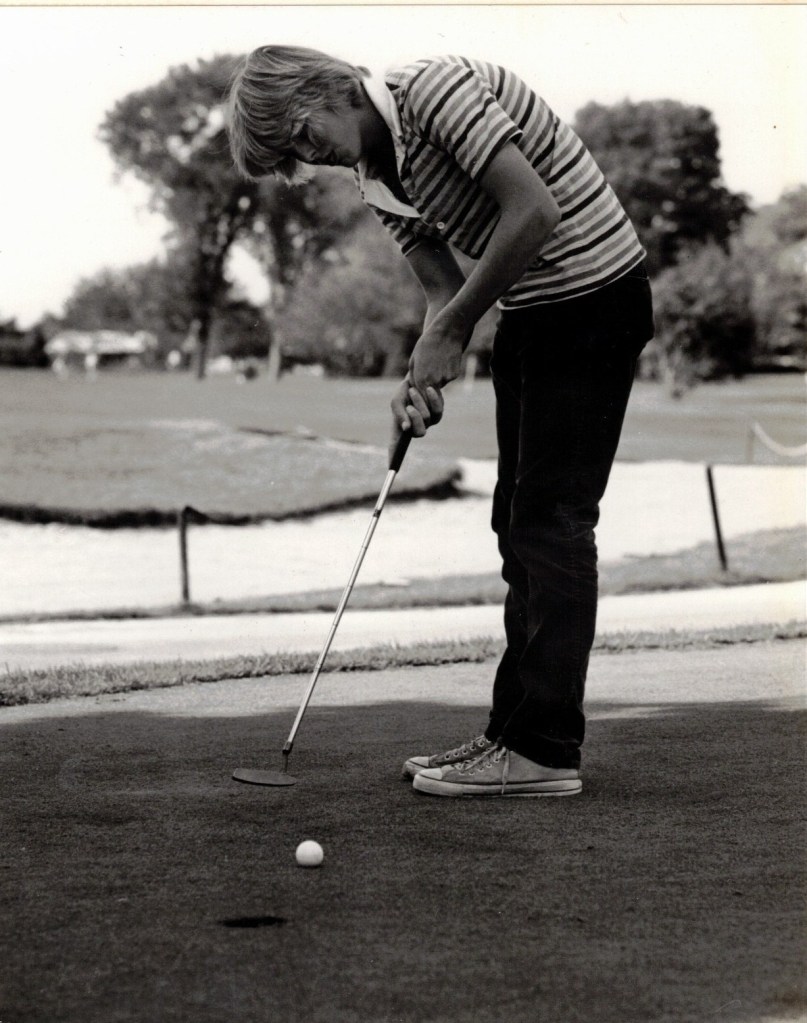
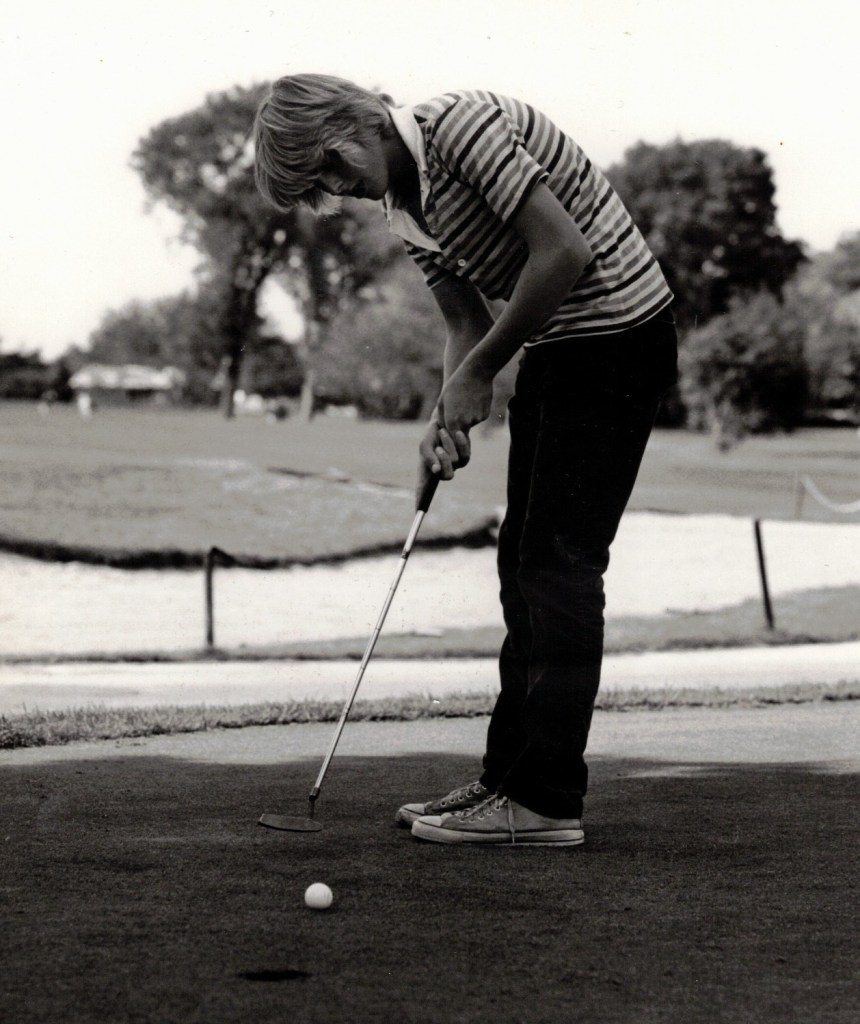
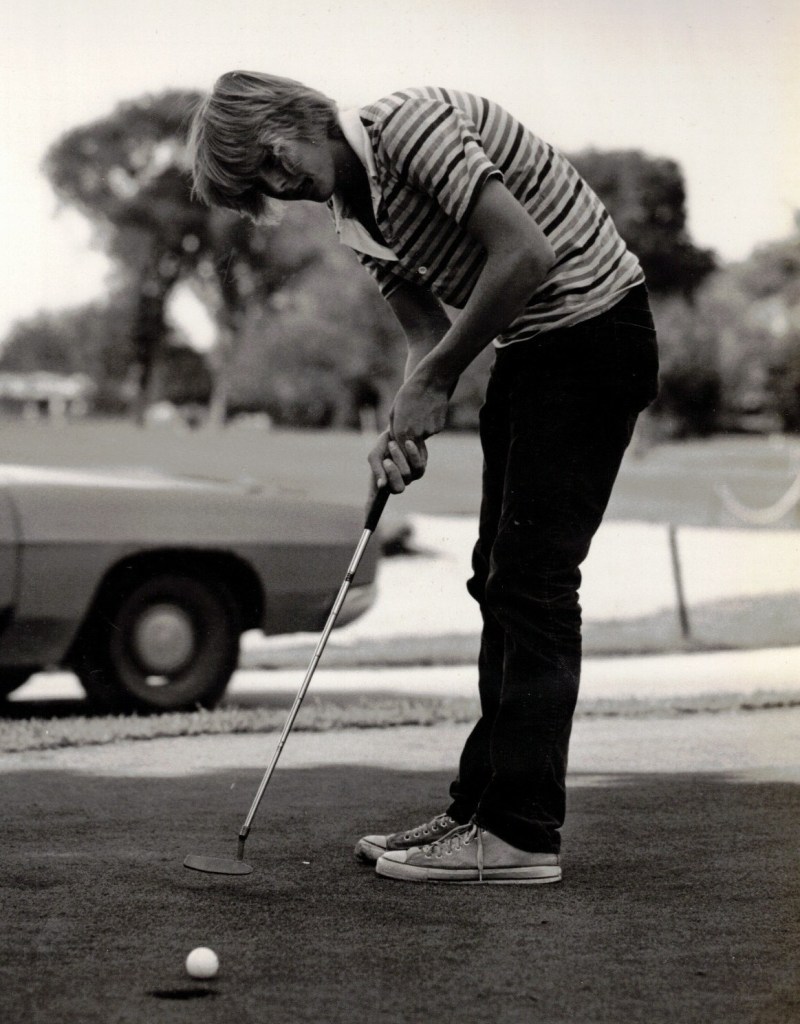
A few years later in the Chicago suburbs of my youth, a few buddies and I played golf at our local muni, Mt. Prospect Golf Club, on $60 youth summer passes. Basketball was my first love, but golf was emerging as another sport, alongside football and baseball, that would compete for second place on my love list. The dad of one of my buddies was a good stick. Fred Fassnacht had golf trophies and medals displayed throughout the family home, giving us impressionable teenaged boys the idea that golf was a “manly” enough sport to pursue.
Bear with me—this was the mid-‘70s, eons before a guy named Tiger Woods made golf approachable and desirable to the masses. Most of the adult golfers we saw at “MP” were males clad in loud plaid pants, who after rounds played poker in the smoke-filled upstairs bar at MP above the pro shop. With their cocktails, cigarettes and cigars, they didn’t give off a vibe of what we younger males considered to be “athletic.”
In 1976, my freshman year at Prospect High School, we labored on the freshman football team—the season starting with double-session practices in the late summer replete with dreaded calisthenics. As the season progressed, we realized we weren’t that good. Maybe two games, as far as I can remember, is all we won. On top of that, the varsity football team wasn’t any better—they stunk.
That same fall, the boys golf team won the Illinois State High School Championship. By the end of our unsuccessful football season, a few of us had made a decision. We don’t care what the guys on the football team—or the girls—say, we’re going out for golf next year. Getting out of class early, playing golf, not having to do dreaded calisthenics, being on a winning team—what’s not to like?!
It turned out to be one of the best decisions of my life.
I played on the sophomore team with my set of beginner clubs. The following summer, as I got more serious about golf and prepped for playing on the varsity team, I fancied a set of Wilson Staff blades, 3-iron through pitching wedge, that I saw advertised in the Chicago Sun-Times. The advertised price was unbeatable and I found out why: It was the owner’s last set and he wanted to keep that advertisement in the paper to bring in customers. He tried to steer me toward a set of Browning 440s, a low-profile club that had two-thirds of a clubface compared to conventional sticks. He asked me what I shot, and I told him I could break 40 for nine holes. He said I wasn’t good enough to play Wilson Staff blades. He was right, but I adamantly told him I was going to get better—by using better clubs. I walked out of that shop with a set of brand new, previous season, Wilson Staffs for $150. Bingo, baby! (A few years ago, a Golf Digest article included the Browning 440s in its list of “The 16 Most Epic Golf Equipment Fails of All Time.” Not buying them was another great decision!)
My senior year, we played the Champaign Invite at the University of Illinois Orange Course, home course of U of I’s golf team. At that time, the Orange Course had old-school front-to-back sloped greens and it was long. And the wind was always blowing off the surrounding cornfields. In anticipation of mid-October’s state tourney at this same track, the Champaign Invite was a mid-September preview tourney for some of the best high school teams in the state. The central Illinois weather that September weekend was nasty—cold, wettish and windy. Six of us played, and our best four scores counted. Our number one player, Paul Keane, was the only one on our team to break 80. I shot an 82, which featured more birdies (3) than pars (2). That September Saturday, the cliché held true: bogey is your friend. I made thirteen of them, but nothing worse. We tied for 1st place, giving us the idea that, perhaps, we had a chance to do well at “state.”
A few weeks later, we won our conference championship. That, however, was as good as it got as we couldn’t emerge out of the following week’s regional tournament.
“We Have a Golf Team?”
I would have loved to play basketball in college, but slowish 6-foot-tall shooting guards were not valued at a premium at that level. I started for my high school team most of my junior and senior years, but this was before the 3-point line was reestablished in high school and college basketball. The college I attended, Augustana-Rock Island, was a D-3 basketball power.
There was a Black guy from Chicago on the team named Odell Peden. He was about 6’2” and could absolutely jump out of the gym. One year he broke his arm and was sidelined for the season. Even so, during halftime of one of the games, while the head coach and the rest of the team—and the refs— were in the locker room, Odell took a ball off the rack and dribbled it onto the floor. He had some friends who were egging him on, saying “Throw it down!” In street clothes and with one arm in a cast, Odell approached the rim, cradled the ball in his one good arm, jumped up and did just that—he threw it down emphatically. Damn. A number of us in the crowd sat stunned with mouths agape. Slam damn!
The next year I was playing a pick-up basketball game at the gym in the late afternoon. These were half-court games, and, occasionally, guys on Augustana’s team would play as well. It just so happened that Odell was playing that day. Even though I was slowish, I could jump pretty good. I loved rebounding. I remember coming in for a defensive rebound from the free-throw line, as I could tell exactly where the attempted shot would miss after bouncing off the rim and backboard. My timing was perfect and I snagged the rebound above two or three others, momentarily turned into flat-footed observers. Immediately, I heard Odell shout out: “Ouwee—look at that white boy jump!”
It was one of the best basketball compliments I ever received. Ahem.
I didn’t go out for baseball in high school, and by simple process of elimination, golf inhabited the number two spot on my sports love list. I was naturally good at it and it was still a blast to connect the clubhead solidly to the ball. And now I was able to chip it close and sink putts—the stuff of keeping your score close to par.
When I applied to Augustana, I talked to the golf coach on the phone. He wanted me to try out for the team, which fit my plans. Golf was a spring sport in college, and Augie’s team had a pretty good track record with a number of conference titles and D-3 national tournament showings in the previous decade or so.
I got on a hot streak during my sophomore season. I wasn’t in the top five players of our team, but I was threatening to break through. For a practice round at our home course, Highland Springs G.C., I shot even par 72 by parring all 18 holes. I had never done that before and haven’t done it since. We then had a meet against two or three other local schools early that season, and I shot a 73. A great score, but since I was playing on our “second” team that day, it didn’t count. That score beat all the scores on our first team, except for our captain’s score, which was one or two under par. Keith Rezin, our senior captain, looked at our coach and said that we needed that 73 on our first team. I didn’t say anything but couldn’t have agreed more.
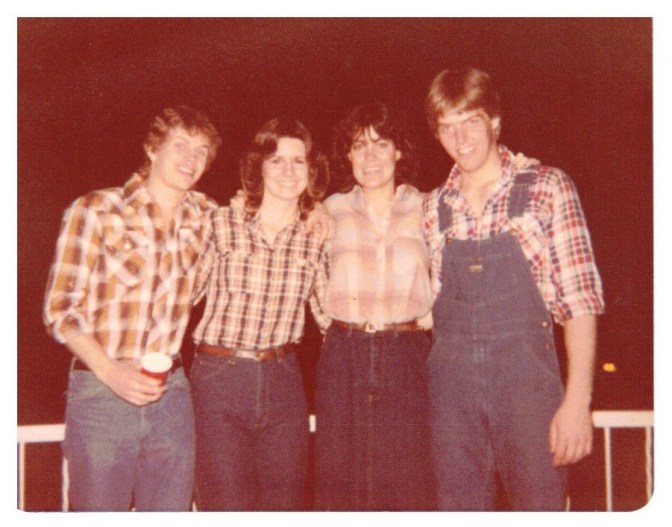
The next week it snowed, and there was no golf team practice. It was mid-April in northern Illinois in the days before climate change. Of course it snowed. A couple of weeks earlier, I had met Denise Zarbuck, a bona fide knock-out. She asked me to a “square dance” party put on by her sorority. We had an enjoyable time and I told her I’d be calling her for a next date.
I called her up a little after lunchtime on the snow day. I wanted to know if she’d like to go to a movie that afternoon, because we didn’t have golf team practice. I purposefully emphasized “no golf team practice” in order to score some impression points with the message that I was on the golf team.
She responded with surprised whateverism: “Really? We have a golf team? No, sorry—I can’t go to a movie this afternoon because I have class.”
Boom. Zero impression points with the golf team mention. And no date. Well, at least she did say that I should call her again sometime for a date when she didn’t have class.
My hot streak—in golf—continued the next week as the snow disappeared. We had another meet prior to our conference tournament. Again, I played on the second team. Again, I shot a score that would have counted on the first team. The first team’s fifth man, a senior, was playing like dirt, not doing any better than mid- to low-80s. This time I spoke up.
Coach, I said, I’m playing better than our fifth man and I think I should have that spot for the conference tournament. He listened and then said let him talk to Keith—our captain. Early the next week. Coach said I’d have a shot at the conference tournament line-up for the fifth and final spot. Our current fifth man and another sophomore who, like me, was also playing pretty well, and I would have an 18-hole play-in.
The three of us teed it up the next day. I had no doubt that I was going to beat my two teammates for the fifth spot. I can’t remember what I shot, but it was mid-70s and neither of my competitors threatened that number. I was going to the conference tourney with a spot on the team.
The tournament would be played at Wolf Creek Golf Club in Cayuga, Illinois, a little more than an hour southwest of Chicago. Our team had won the College Conference of Illinois and Wisconsin four straight years. Our coach liked to remind us that we needed to keep that streak rolling. If we won the conference tournament, we would then have a chance to be invited to the NCAA D-3 national tournament two weeks hence.
The conference meet was a 36-hole event, the Thursday and Friday of the first full week of May. Wolf Creek was a nice track with great greens. In flat central Illinois on that Thursday, there was nothing to stop an incredibly strong northwest wind that blew hard all day long.
From the Pontiac Pantagraph, May 7, 1982 as reported by Cliff Schrock:
“One by one they came blowing in—hair standing on end, eyes red from blowing dust, clothes rumpled—having fought the brave war against 40-45 mph winds that never let up and made a sandstorm out of the bunkers at the Wolf Creek Golf Course here Thursday.
“Chances are the 40 golfers in the 36th College Conference of Illinois and Wisconsin Tournament wouldn’t have played golf in the miserable conditions if it hadn’t been an important meet.
“Yet, once finished with the first 18 holes of the 36-hole meet, they could feel victory no matter what they shot. When tee shots are blown two fairways over and 3-irons from 150 yards out come up short of the green, the fun is eliminated and torture sets in like a plague.
“Tournament favorites Augustana and Millikin survived the conditions the best. The Vikings, chasing their ninth title in 11 years, lead with 334 strokes . . .
“Tim Anderson’s five-over-par 77, the day’s low score on the 6,574-yard layout, led Augustana, which had four of the top 10 individual scores . . .
“Anderson had five bogeys and two double bogeys, yet recorded two birdies plus an eagle on the 500-yard par-5 fifth hole. The sophomore reached the green in two and made a thirty-five-foot putt.”
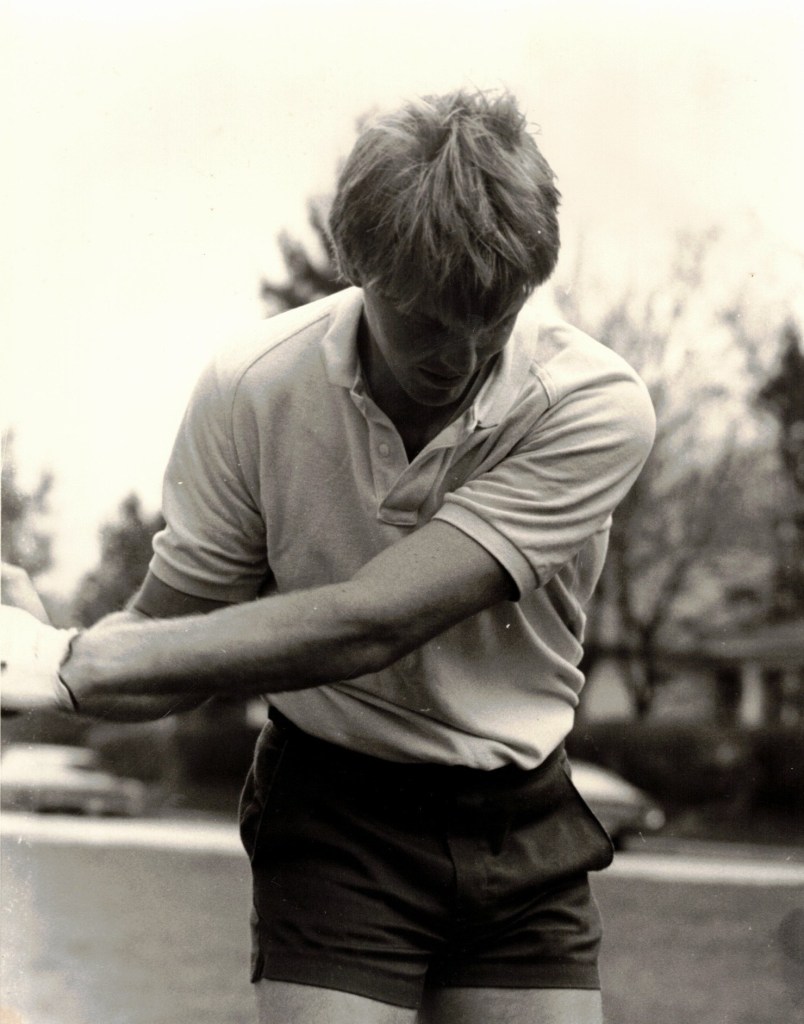
I was the only player in the field to break 80 that first day. The weather on the second day was perfect. While playing, I didn’t want to think about being tournament medalist, so I dug into the “one shot at a time” vibe. It worked. Even though I doubled bogeyed the last hole resulting in another 77, I won the title by three shots. Our team also won the conference title, our fifth in a row.
I called Denise when we returned to school late on Friday night. She knew that I had been playing in the tournament. I told her I won it. “Won it? Wow.” This time she was genuinely impressed.
We had a good team. And not only that, our coach was on the committee that would pick the twelve teams that would make it to nationals. We were stunned when Coach told us that we hadn’t been invited to go to nationals. He never gave us an explanation, but I suspect that he didn’t think our team was as good as some of his previous teams that won conference and went to nationals.
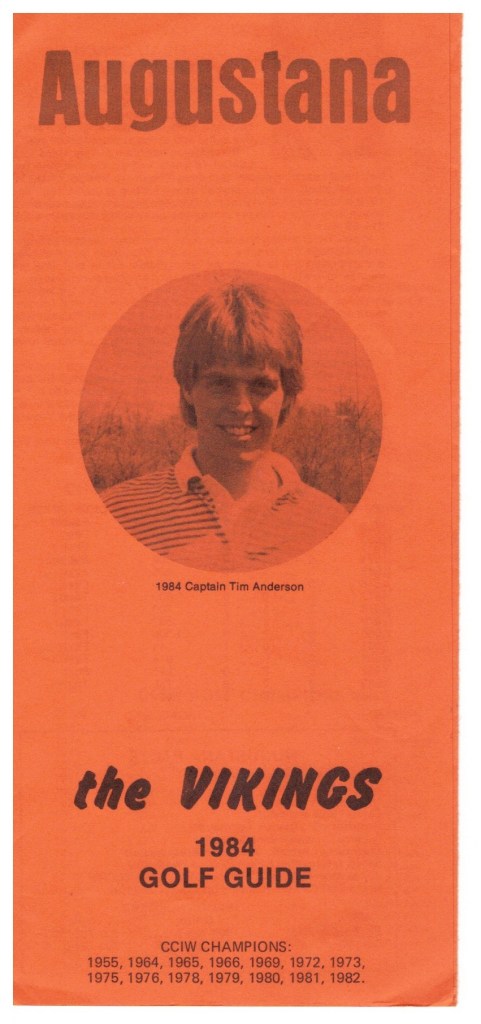
My teammates voted me team captain my senior year. I never caught the same magic I had when I was a sophomore, but I did fire a 75 to finish out my college career in style at the same course where I medaled two years prior.
Click here for “My Golf Story – Part II”
T. Carlos “Tim” Anderson – I’m a Protestant minister and Director of Austin City Lutherans (ACL), an organization of partners in Austin, Texas working together to serve low-income individuals and families.



 T. Carlos Anderson